

Mob:- +91 8882994988
Email:- industrialengineeringsyndicate@gmail.com
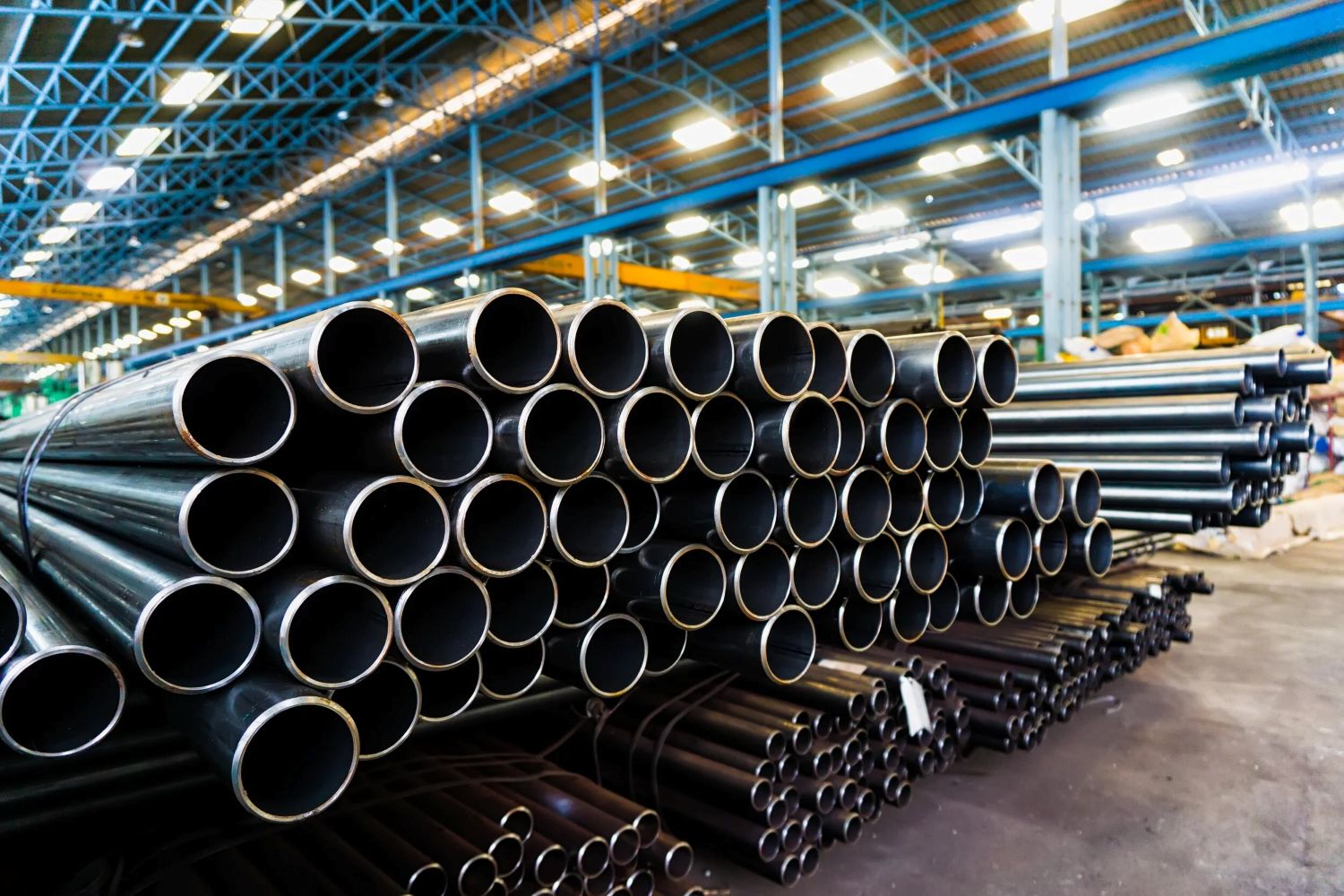
🔧 What Are Carbon Steel (CS) Seamless Pipes?
Carbon Steel Seamless Pipes are cylindrical steel tubes made without a welded seam. They are formed by extruding or piercing a solid billet, resulting in a smooth, continuous structure that offers uniform strength and superior mechanical properties compared to welded pipes.
🧱 Key Features
✔ Seamless Construction: No welds mean fewer weak points, making them ideal for high-pressure and high-temperature services.
✔ High Strength & Durability: Excellent tensile strength and impact resistance for demanding applications.
✔ Accurate Dimensions: Smooth internal surface and precise tolerances improve flow efficiency.
✔ Wide Material Grades: Available in grades like API 5L, ASTM A106, ASTM A53, EN 10216, and more for different service needs.
✔ Heat & Pressure Resistant: Suitable for systems with extreme conditions where welded pipes may fail.
✔ Corrosion Resistance (Moderate): Often used with coatings or insulation for extended life.
🏭 Common Materials & Grades
• ASTM A106 Gr. B/C – Most common grade for high-temperature and petrochemical.
• ASTM A53 Gr. B – General construction and low-pressure applications.
• API 5L PSL1/PSL2 – For oil, gas, and pipeline transport systems.
• EN 10216 Series – European standard carbon steel seamless pipes.
📏 Typical Sizes & Specifications
• Outer Diameter: 1/2″ to 24″ (and larger)
• Wall Thickness: SCH 10, SCH 40, SCH 80, SCH 160, etc.
• Length: Standard 6m / 12m or cut-to-length on request
• Ends: Plain, bevelled, threaded (NPT), or custom
📌 Applications
Carbon steel seamless pipes are used in:
✔ Oil & gas transmission lines
✔ Refineries and petrochemical plants
✔ Power generation boilers and heat exchangers
✔ Hydraulic systems and high-pressure lines
✔ Water and steam distribution
✔ Construction and structural supports
🛠️ Advantages
• Withstands high pressures and temperatures
• No weld defects → improved reliability
• Better fatigue resistance
• Smooth bore reduces flow turbulence
