
What is ERW & Why APL Apollo Uses It
-
ERW (Electric Resistance Welding) is a process of making steel pipes/tubes by rolling steel sheets (or coils) and welding them using electric resistance heat. It's efficient and good for consistent sizes, used widely in structural and piping applications.
-
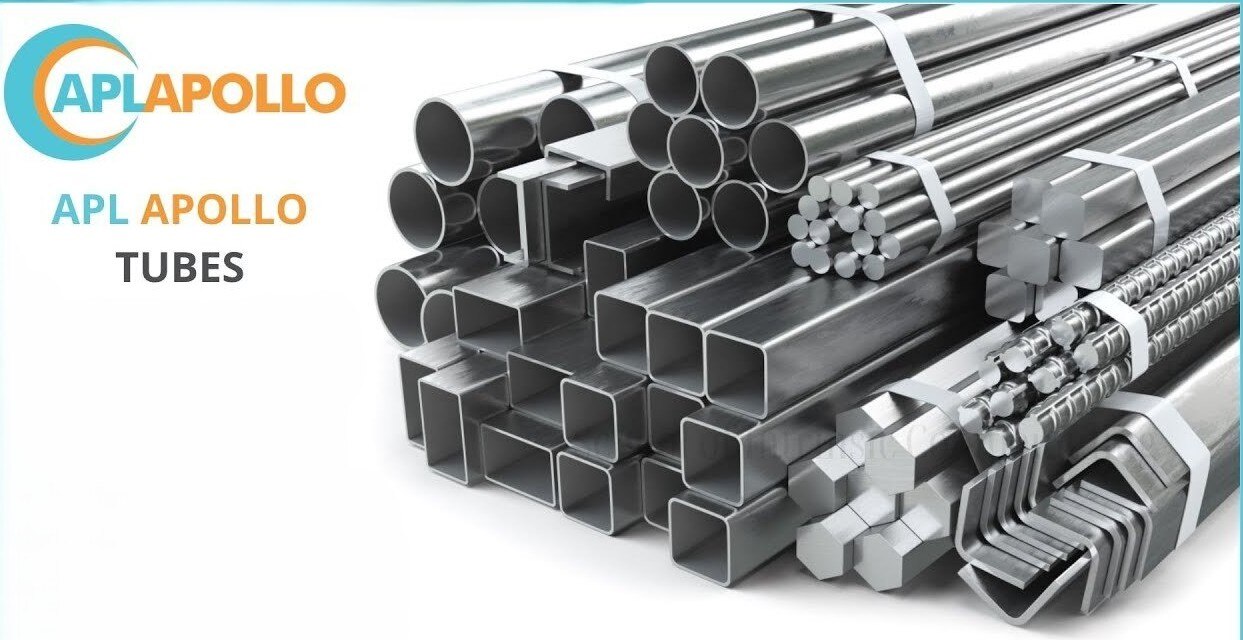
APL Apollo is one of the largest producers in India of ERW steel pipes/tubes.
Key Specifications & Product Ranges
Below are dimensions, shapes, thicknesses, finishes etc., for APL Apollo ERW products:
| Product / Variant | Sizes (Outer Diameter / Dimensions) | Wall Thickness | Lengths | Finishes / Coatings | Typical Uses |
|---|---|---|---|---|---|
| Apollo Structural (RHS / SHS etc.) | RHS: 26 mm × 13 mm up to 400 mm × 200 mm; SHS: 12×12 up to 300×300 mm | 0.8 mm to ~12 mm | 4.0 m to 12.0 m | Usually black (plain steel) unless otherwise coated or treated | Structural applications: frames, building supports etc. |
| Round ERW Pipes (Black / Plain MS) | Round outer diameters from small (e.g. 15 NB etc.) up to quite large (e.g. 750 mm round in MS pipes examples) | Wall thickness varies depending on size: for example, 150 mm OD round pipe with wall thickness ~3.6 mm; other sizes show 0.8-12 mm depending on shape & use. L&T-SuFin | Usually 6.0 m (some variants 3 m) etc. Standard structural/pipe lengths. L&T-SuFin+ | Plain MS (black), sometimes galvanized or with other coatings depending on product (Apollo Bheem, Tricoat, etc.) | Water lines, general piping, irrigation, industrial fluid lines etc. |
| Apollo Bheem (GI coated ERW round pipes)** | Sizes: 15 NB to 150 NB | Thickness: ~1.6 mm to ~3.2 mm; higher on request | Lengths: 4.0 m to 12.0 m | Galvanized, with “higher GSM pure zinc coating” for corrosion resistance. | Industrial water lines, irrigation, plant piping etc. |
| Tricoat Pipes | CHS (circular hollow section) OD ~20.40 mm to ~74.50 mm; RHS, SHS also offered in certain sizes. | Thickness ~1.0 mm to ~3.0 mm for CHS; RHS/SHS have similar range (1.6-3.0 mm) in Tricoat variants. | Length 3.0 m to 12.0 m | Triple layer coating (zinc, top coat, etc.) ‒ more rust / corrosion resistance. | Where aesthetics + corrosion resistance both matter: gates, railings, decorative structural parts etc. |
| Large Diameter MS ERW Pipes | Examples: 750 mm outer diameter round MS pipe with ~10 mm wall thickness used in general construction/piping under IS 1239 etc. | ~10 mm in that large size example; of course smaller diameters have smaller thicknesses depending on load / pressure. | Length ~6 m in that example. | Plain MS / Black (for structural / non-coated uses), or can be coated if required. | Industrial piping, large water supply, framework etc. |
Standards & Material Grades
-
Many APL Apollo ERW pipes are made to Indian Standards (IS) such as IS 1239 for structural MS pipes/pipes for water supply etc. Projects Today+3
-
Some other standards mentioned: ISI 2062 appears in some MS ERW pipe listings.
-
For coated / special finish ones (e.g. Tricoat), certain coating/quality standards like IS: 4923-1997, IS: 3601 etc are cited.
Strength, Coating & Performance Features
-
For coated products like Apollo Bheem, there is “higher GSM pure zinc coating” to improve corrosion resistance.
-
ERW tubes in general as per APL Apollo’s product descriptions are used in structural applications due to uniform strength around axis, good dimensional accuracy. E.g. large hollow sections for columns etc.
-
Some designer/commercial ones (Elegant, Signature etc.) have nicer finishes, embossing/designs + coatings.
Advantages & Limitations
Advantages:
-
Cost-effective vs seamless / thick welded pipes for many uses.
-
Good dimensional consistency.
-
Fast production.
-
Good strength for structural applications especially in hollow section forms (RHS, SHS, CHS).
-
Variety: plain vs galvanized vs hybrid vs tricoat gives flexibility.
Limitations:
-
Weld seam may be a weak point compared to seamless pipes under some stress / pressure conditions (though modern ERW is pretty reliable).
-
Coating / corrosion protection depends heavily on post-processing; plain ERW pipes need protection if used in corrosive environments.
-
Wall thickness & diameter govern pressure ratings; large diameters need thicker walls to maintain strength.
