

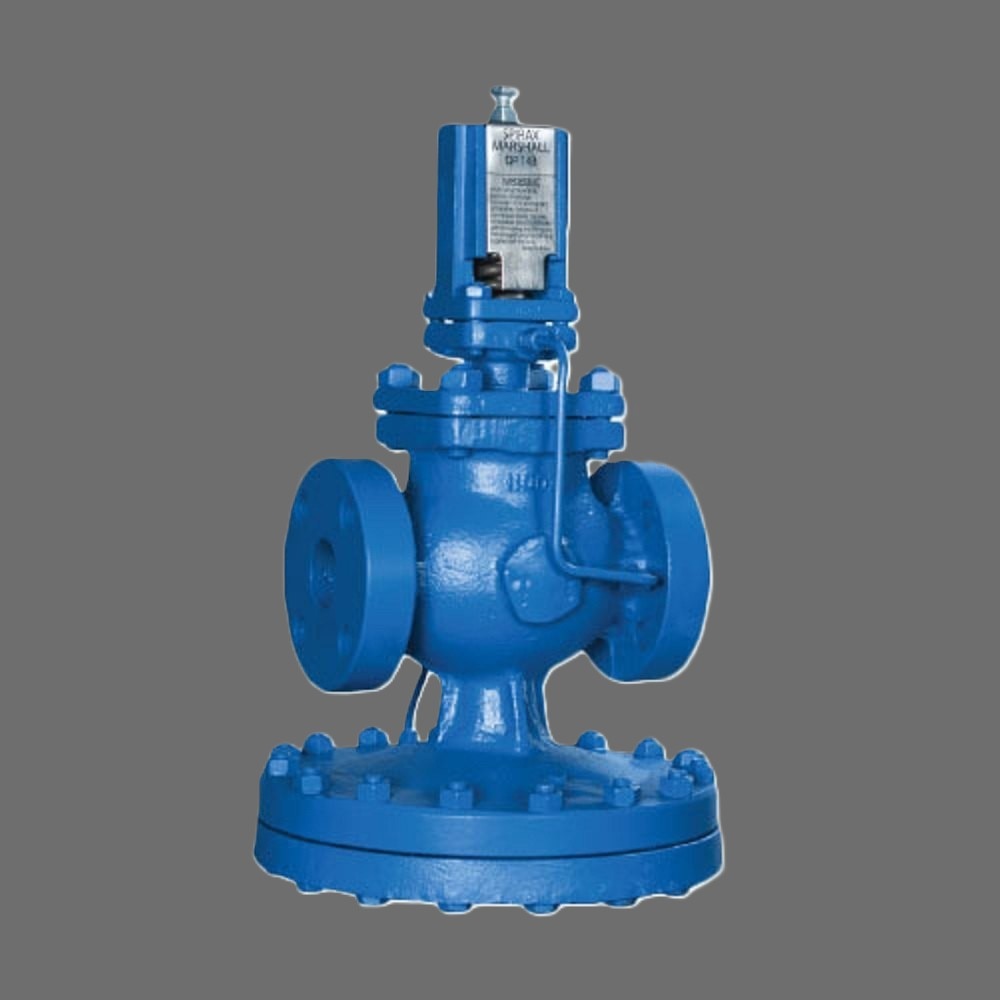
Description
A Carbon Steel Pressure Reducing Valve (PRV) is an automatic valve designed to reduce and regulate high inlet pressure to a desired lower outlet pressure. It maintains a preset downstream pressure regardless of fluctuations on the upstream side, ensuring safe and stable operation of piping systems, equipment, and end-use appliances.
Construction & Materials
-
Body & Bonnet: Carbon Steel (ASTM A216 WCB / A105)
-
Trim (Disc, Seat, Stem): Stainless Steel / Alloy Steel
-
Control Spring & Diaphragm: Stainless Steel / Fabric-Reinforced Elastomer
-
Seals & Gaskets: Buna-N / EPDM / PTFE (service dependent)
Operating Principle
Works automatically using a diaphragm, spring, and pilot arrangement:
-
Upstream high pressure pushes on the diaphragm.
-
The internal spring tension is set to the desired outlet pressure.
-
The valve modulates opening or closing to maintain stable downstream pressure.
Standards & Compliance
-
API 526 / API 527 (where applicable)
-
ASME B16.34 (valve dimensions & ratings)
-
ANSI / BS / ISO compatible designs
Key Features
-
Automatic pressure regulation without external power
-
Smooth response to pressure fluctuations
-
Accurate downstream pressure control
-
Robust carbon steel construction for high temperature & pressure
-
Long service life with minimal maintenance
-
Optional pilot-assisted or direct-acting configurations
Typical Pressure Class & Ratings
-
Pressure Classes: Class 150 to Class 600 (or custom)
-
Pressure Range: From high inlet (e.g., 250–3000 psi) to controlled lower outlet
-
Temperature Range: Suitable for hot water, steam, air, gas, oil systems
Applications
-
Steam & Condensate Lines
-
Compressed Air Systems
-
Hydraulic & Process Control Plants
-
Water & Firefighting Systems
-
Oil & Gas Facilities
-
Chemical & Petrochemical Industries
Why Use a CS Pressure Reducing Valve?
-
Protects downstream equipment from overpressure damage
-
Improves energy efficiency
-
Ensures consistent process performance
-
Reduces wear and tear on valves and instruments
