
Description
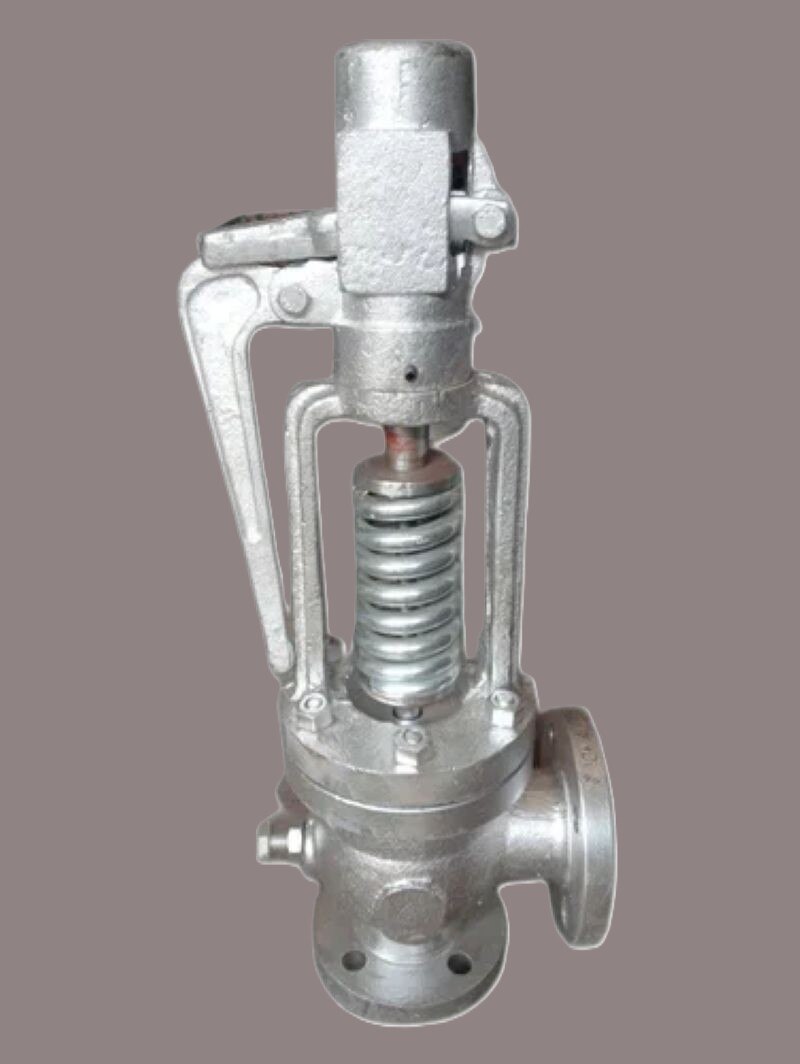
A Carbon Steel Safety Valve is a mechanical device designed to automatically release pressure from a vessel, pipeline, or equipment when the internal pressure exceeds a preset limit. It ensures protection of equipment and personnel by preventing over-pressure conditions in steam, gas, liquid, or air systems.
Construction & Materials
Body / Bonnet: Carbon Steel (ASTM A216 WCB)
Trim (Disc/Seat/Stem): Stainless Steel / Hardened Steel / Stellite (depending on service)
Spring Material: Alloy Steel / Stainless Steel
Gasket / Seal: Graphite / PTFE / Spiral Wound (as required)
Design Standards
ASME Section I / VIII / API 526 / API 527
ASME B16.34 (valve dimensions & rating conformity)
ANSI / BS / ISO compliant versions available
Key Features
Set Pressure Range: Custom-set per system design (factory pre-set as required)
Pressure Class: Typically Class 150 to Class 2500 (industry dependent)
Outlet Connection: Flanged (ASME B16.5) / Screwed / Nozzle
Lift Type Options:
Full Lift (fast opening, higher capacity)
Partial Lift (smoother performance for some services)
Operation: Spring-loaded with lever / weight / pilot-assisted designs
Performance & Capabilities
Rapid response to over-pressure
Accurate set pressure and reseating
Low leakage & reliable reseal
Suitable for repeated duty
Handles steam, gas, and liquid applications
Typical Applications
Steam Boilers & Steam Lines
Pressure Vessels & Heat Exchangers
Compressors & Air Receivers
Chemical & Petrochemical Plants
Refineries & Power Stations
Process & Utility Piping
Why Use a CS Safety Valve?
Protects equipment integrity by preventing over-pressure failure
Offers fast acting safety response
Built for high temperature and high pressure environments
Carbon steel gives excellent mechanical strength and durability
