

Mob:- +91 8882994988
Email:- industrialengineeringsyndicate@gmail.com
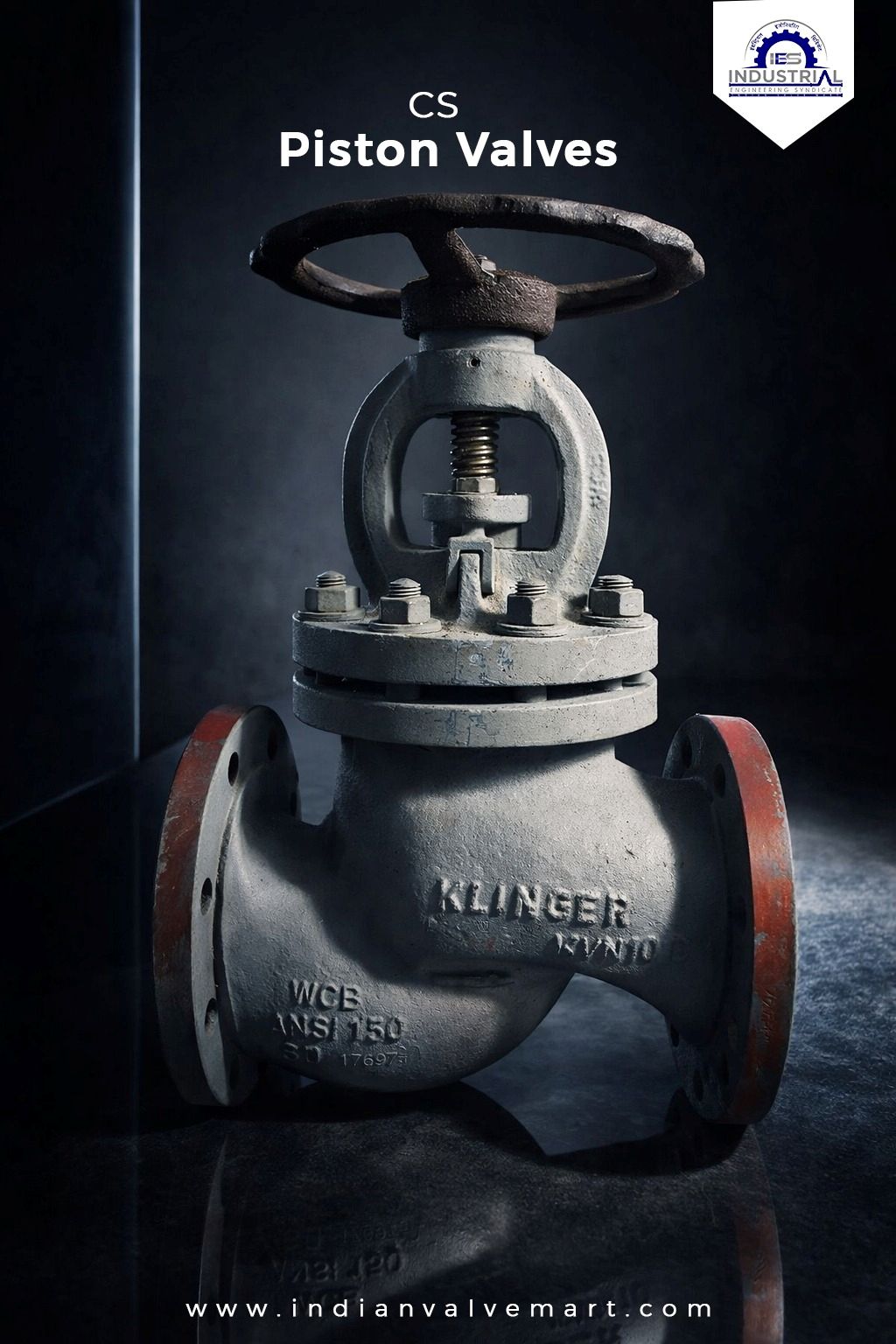
🔧 What Is a Piston Valve?
Piston valves are robust industrial shut-off valves where a cylindrical piston moves within sealing rings to control fluid flow. Unlike traditional valves, they offer bubble-tight sealing, minimal leakage, and excellent control characteristics, making them ideal for demanding process environments.
🛠️ Key Features
-
Reliable seal: Sealing system with elastic valve rings provides tight shut-off to both the pipeline and atmosphere, preventing leaks.
-
Low maintenance: Designed for long service life with minimal maintenance and easy in-line servicing without removal from the system.
-
Wide temperature & pressure range: Standard designs handle temperatures from roughly -10 °C up to +400 °C and pressure classes PN16/40/63 or ANSI Class 150/300.
-
Versatile connections: Available in flanged, threaded, butt weld, and socket weld ends to suit various piping standards.
⚙️ Materials & Sizes
Common materials include grey cast iron, nodular iron, cast steel, and stainless steel, covering intermediate to heavy-duty applications from DN 15 to DN 200 (½″–8″).
📌 Typical Applications
Piston valves are trusted in steam and condensate systems, chemical process plants, water treatment, HVAC systems, and wherever tight shut-off and durability are essential.
