

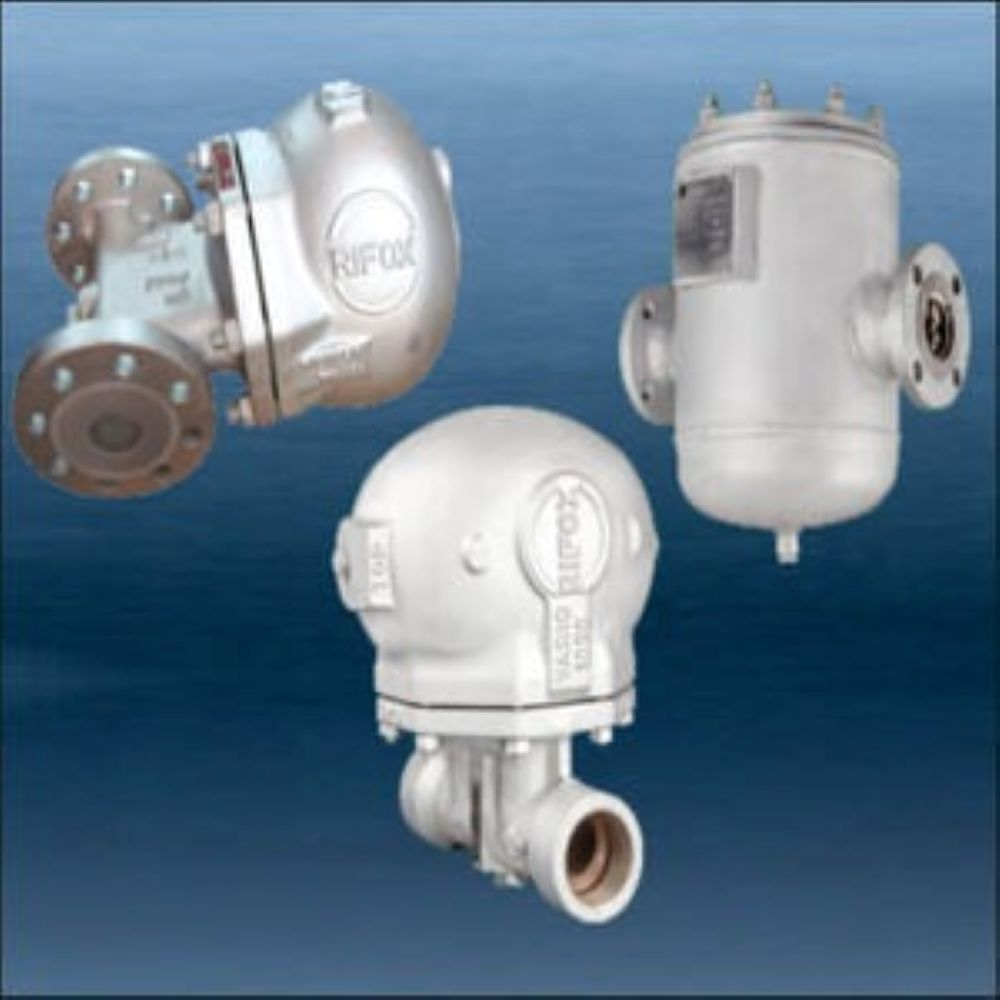
Description
A ball float steam trap operates on the buoyancy principle — a float inside the trap rises and falls with the level of condensate. As condensate accumulates, the float rises and opens a discharge valve to remove it; when condensate falls (steam arrives), the valve closes to prevent live steam loss. This type is ideal for continuous condensate discharge under varying loads and helps protect steam system equipment and maintain energy efficiency.
Construction & Materials
Body: Carbon Steel (CS) — robust for high temperatures and pressures
Internals: Stainless steel floats and trim for corrosion resistance
Strainer: Many models include a built-in strainer/sight glass (depends on design)
Working Principle
Buoyancy Action: The internal float rises with condensate, opening the discharge port.
Steam Retention: When condensate level drops, the float falls and closes the valve, retaining steam and preventing energy loss.
Continuous Mode: Suitable for continuous condensate removal under varying steam loads.
Typical Features
✔ Automatic continuous condensate discharge
✔ Minimizes steam loss with tight shut-off
✔ Handles moderate to high condensate loads
✔ Resistant to steam lock and moderate water hammer (with design enhancements)
✔ Can include sight glass or air vent/moisture vent (model dependent)
Applications
Steam coils and heat exchangers
Steam-heated vessels and tanks
Process heating systems
Utility steam distribution lines
Boiler condensate return lines
Benefits
Energy efficiency: Removes condensate close to steam saturation temperature
Protects equipment: Prevents water hammer and condensate buildup
Low maintenance: Simple, reliable mechanical design
Versatile: Works under variable load conditions
Notes
Thermax’s steam trap range generally includes multiple types (ball float/float-controlled, thermodynamic, thermostatic, bi-metallic) suitable for different service conditions — consult the manufacturer for exact model specifications and IBR approval details.
